A surprise happens in a moment. Suspense gives that moment a future—and asks you to wait while several outcomes remain possible.
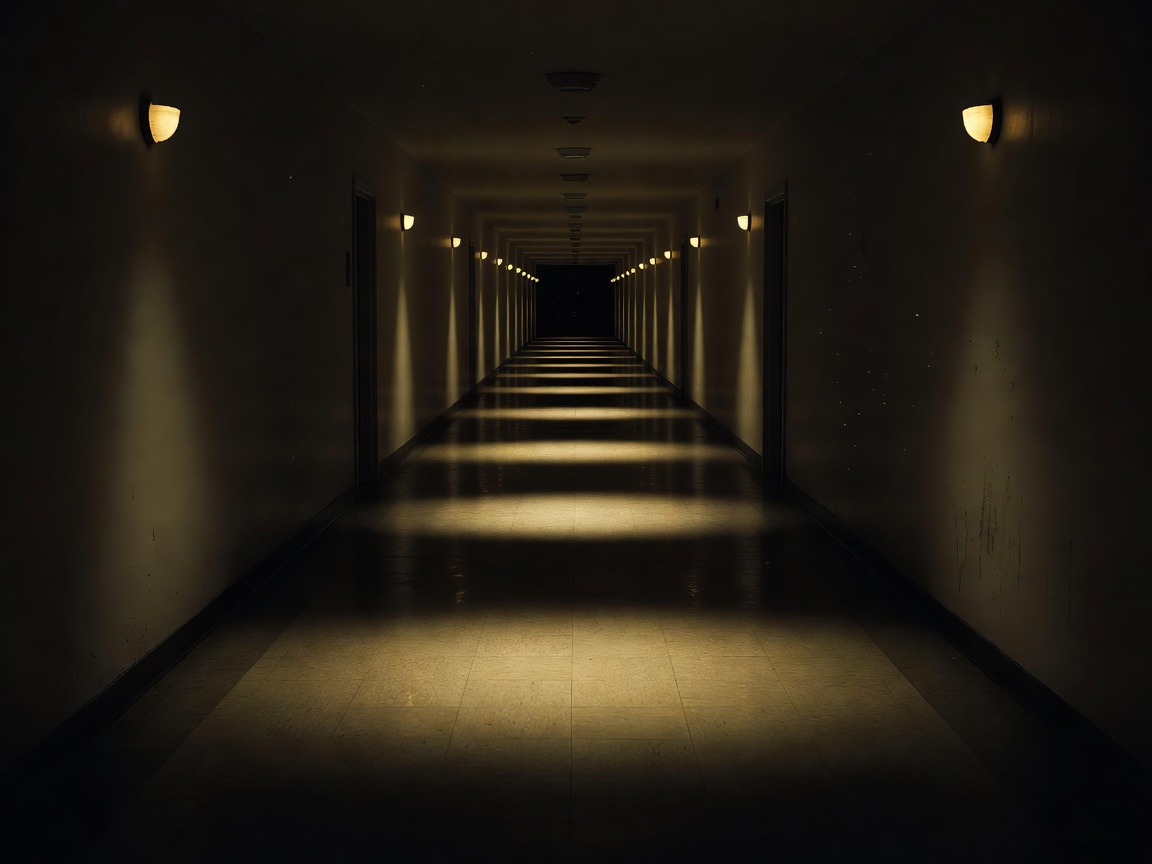
Atmospheric stand-in: an empty frame can make an arrival feel imminent.
Make an outcome matter
A ticking clock is only a sound until the audience understands what may happen when it stops. Suspense needs stakes, a plausible threat and some uncertainty about how events will resolve.
Those stakes need not be fatal. A concealed letter, an approaching confession or a conversation overheard by the wrong person can create intense anticipation.
Control who knows what
When viewers know about a danger that a character does not, ordinary behaviour becomes charged. Someone searching for their keys can feel painfully slow if the audience knows they must leave immediately. The action has not changed; its meaning has changed because of an information gap.
The reverse arrangement also works. A character may recognise a threat before the audience understands it. Their hesitation, a withheld reverse shot or a sudden change in speech tells us that something matters while delaying the reason. This creates curiosity alongside suspense, though the two are not identical.
Curiosity asks what happened or what something means. Suspense asks what will happen to an outcome we care about. A mystery can use both: a past event creates the question, and the effort to investigate it exposes someone to a future risk.
Alfred Hitchcock’s well-known distinction between surprise and suspense, discussed in François Truffaut’s Hitchcock/Truffaut, centres on how advance knowledge transforms a scene. The practical lesson is not “always show the threat.” It is to choose deliberately which relationship between audience and character best serves the scene.
Make the space readable
Viewers cannot anticipate a movement if they have no sense of where anything is. Establishing a door, a corridor and a possible hiding place gives later shots a practical geography. Once that geography is clear, a small change—a door left open, a light extinguished—can carry disproportionate weight.
Readable space does not require a floor plan. A few consistent eyelines and repeated landmarks may be enough. Conversely, deliberate disorientation can work when confusion itself is the danger. The key question is whether uncertainty about space is a designed experience or an accidental obstacle to following the action.
Rear Window demonstrates how a stable viewing position can organise expectation. Steven Spielberg’s Jaws is useful for considering how visible and unseen space interact. These references concern broad craft choices, not the resolution of either film.
Surprise
A door opens suddenly, revealing something the viewer had no reason to expect.
Suspense
We hear someone approaching the door while a character struggles to hide a letter.
Let sound exceed the frame
A footstep can create a person the image has not yet confirmed. A hum that stops can make the silence feel active. Offscreen sound extends the story’s space, inviting the audience to imagine movement beyond the visible boundary.
But sound needs context to remain useful. If every noise is treated as equally threatening, emphasis loses its discriminating power. A film can establish an ordinary sound, repeat it and then alter one feature. The variation matters because the audience has learned a baseline.
Music can shape expectation without proving anything about the story world. An ominous score may tell us how to feel, but it does not establish that a character has heard a threat. Distinguishing score from sounds available to the characters prevents an emotional cue from being mistaken for factual evidence.
Delay with purpose
A long take can make waiting physical because it refuses the relief of a cut. Rapid cutting can instead create pressure by alternating between actions whose timing may collide. Neither technique guarantees suspense. The scene must still make the relevant relationship understandable.
A useful delay changes the situation while postponing resolution. A character nearly finds the letter, gets interrupted and leaves it somewhere more exposed. A weak delay simply repeats the same obstacle without increasing risk, revealing character or altering the available choices.
David Fincher’s Zodiac offers material for studying procedural waiting and uncertain interpretation. Henri-Georges Clouzot’s The Wages of Fear offers a different model, emphasising practical tasks whose smallest movements carry consequences. Their approaches show why suspense need not depend on a hidden identity or a final twist.
Why a second viewing can still work
Knowing the outcome does not necessarily remove anticipation. You can understand where a sequence is going and still respond to its timing, performances and moment-to-moment obstacles. Attention shifts from discovering the result to experiencing how narrowly the characters reach it.
This is also why an ending should not be the only thing a mystery offers. If all interest disappears once the answer is known, the story may have relied mainly on withholding. Strong craft leaves other pleasures available: precise staging, conflicting desires, persuasive uncertainty and details that acquire new weight.
On your next rewatch, choose one sequence and track only information changes. Note when you learn something, when a character learns it and when either of you acts on it. The resulting map often explains the pressure more clearly than simply counting cuts or jump scares.
We use cookies Essential cookies keep this site working. Optional ones help us see what is useful. You can change your choice at any time. More about cookies